 About GamePeople



Search for games
Why we're different
Come again?
Ways to thumb our pages
Never miss a beat
 RSS
RSS
 Email
Email
 Twitter
 Facebook
Console Game Reviews
Wii (MotionPlus) (Wii-Ware)Handheld Game Reviews
3DS DS (DSi-Ware)Game Genres
(Overview) Adventuring Fighting Minigames Platforming Rhythm Improving Shooting Racing Sporting StrategyMulti-player Styles
(Overview) Assistance Competitive Co-operative Shared-screen Split-screenSingle-player Styles
(Overview) Augmented Reality Dating games First Person Meta-games Physical Real-time Single Player Campaign Third Person Turn Based 3D
Subscribe to the Soulful Gamer column: RSS or
 Newsletter.
Format:
360
Genre:
Adventuring
Buy/Support:
Support Adam, click to buy via us...


Other GamePeople columnists have reviewed this from their perspective - huh?:
Returning Gamer (360)
Frugal Gamer (360)
Intimate Gamer (360)
Frugal Gamer (PS3)
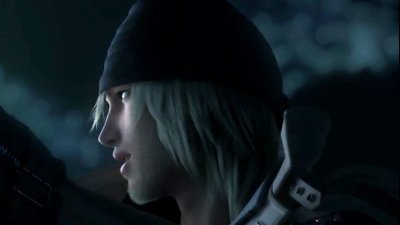
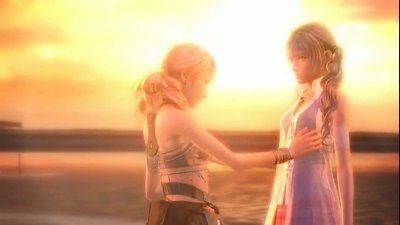
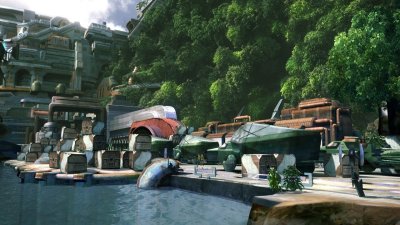
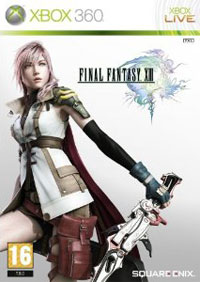
Final Fantasy XIII is one of the most conflicted games I've ever played. For the first thirty hours I was entranced by its world, the collection of flawed, unlikable characters and its fascinating story. Instead of using its linear narrative to drive home a meaningful story I found the game unwilling to reach a conclusion and subsequently the experience drained of life for me.
It was a direction that Final Fantasy games have always threatened to take ever since the spectacular success of Final Fantasy VII in 1999 So Final Fantasy XIII's incredibly linear approach for the first half of its 60 or so hours comes as a welcome surprise for someone who finds sprawling open-world games lacking in both direction and interest.
The effect of this linear approach is immense - and all for the better. Final Fantasy and JRPGs in general have always been about telling a story with new and interesting battle mechanics filling in the game play. Exploration and discovery plays a part sure, but these aspects have always been overdone and seem to be included more because of people's expectations of a 60 hour experience.
The character of Sazh stands out as a man ripped apart by the love for his son and the despair he feels for his situation.
So for the first thirty hour of Final Fantasy XIII I was thrilled to discover that the game didn't feel the need to throw out side-quests or paper-thin towns to dilute the narrative. Telling a story, and a complicated one at that, requires focus and pacing - something FFXIII seemed to revel in right from the start.
Unfortunately though this story is delivered pretty poorly. For those first twelve hours the narrative that binds the world together is obscured by shaky dialogue and minimal exposition. It should really do a better job of communicating the facts than having to trawl through menus. But despite that, I found reading about the world was far more soulful than listening to stilted dialogue.
A world created like this with all its deep history, culture and nuances would mean nothing if the story and characters didn't gel and it's here that Final Fantasy XIII's best and worst elements are found. Most characters feel as if they're not meant to be liked. Lightning is an aloof, monosyllabic heroine; Snow is a stupid over-Americanised jock that feels like a parody of film and video game action heroes. Unfortunately, he never has a big enough fall to make all that blustering pride seem worthwhile. Hope is a snivelling young boy (though understandably so) and Vanille takes top marks for being the most irritating character of the lot - not helped by nasally voice acting that just can't convey a dippy Japanese girl without sounding contrived.
There was something highly charged under the surface of Final Fantasy XIII that occasionally rose up to deliver an emotional blow.
In spite of these concerns the game was still engrossing. The underlying feelings I had were similar to the emotional depth of Lost Odyssey. There was something highly charged under the surface here that occasionally rose up to deliver an emotional blow.
Never quite as telling as Kaim's tragic memories in Lost Odyssey - but when it did deliver Final Fantasy was much more subtle. The character of Sazh stands out as a man ripped apart by the love for his son and the despair he feels for his situation. There were several scenes that made me forget I was playing a game and made me feel really connected with this character.
Getting to the village of Oerba in Chapter 11 was a perfect example of an excellent opportunity for some pathos or melodrama that was totally over-looked. The scenes of an abandoned schoolhouse and broken bridges were excellent markers to tell a forlorn tale of a world destroyed by the character's actions. Yet none of this was even referenced and served only as scenery to item gathering and a setup for an end of chapter boss.
This eventually broke the flow of the game for me. Suddenly I found myself in a wide-open space with side-missions on offer and a huge range of over-powered enemies to deal with. For the next 20 hours the game ground to a halt as I was required to work up to a certain level in order to proceed. This may be normal practice for most RPGs but in a game that insists on being so linear for thirty hours, it's a brutal change of pace.
The story was quickly buried after hours of enemy encounters and the end of the chapter highlighted the most irritating and soul-destroying part of the game's make-up - its boss battles.
The story was quickly buried after hours of enemy encounters and the end of the chapter highlighted the most irritating and soul-destroying part of the game's make-up - its boss battles. These battles are well structured in the main. Even so, they often put down an iron boot that blocks the game's flow and left me banging my head against a brick wall for hours - until I figured out how to pass. I'm not averse to boss battles in games but having such an open and wonderfully linear experience beforehand makes Chapter 11 a completely destructive moment in terms of my experience.
This point proved to be my undoing and I failed to progress any further. It single handedly ruined Final Fantasy XIII and I'm bitterly disappointed that I can't reach the end of the game thanks to these traditional elements arising in a game that ostensibly tries to make itself accessible to all players.
In spite of all these flaws the soul of Final Fantasy XIII feels worthy of interest and offers many nuances and allegories that could be borne out in its conclusion. Sadly its reliance on old-school boss battles and patchy characterisation ruins the premise and choked the story to an premature and disappointing death.


 RSS | Newsletter
Share this review:
RSS | Newsletter
Share this review:
Adam Standing writes the Soulful Gamer column.
"Soulful gaming is found in a myriad of places. Games that tell a meaningful story with believable characters. Games that tackle issues larger than the latest run and gun technology. And for me in particular, games that connect me to an inspiring story often quietly overlooked by other players."
Here are the games I've been playing recently:
© GamePeople 2006-13 | Contact | Huh?

|
Family Video Game Age Ratings | Home | About | Radio shows | Columnists | Competitions | Contact
With so many different perspectives it can be hard to know where to start - a little like walking into a crowded pub. Sorry about that. But so far we've not found a way to streamline our review output - there's basically too much of it. So, rather than dilute things for newcomers we have decided to live with the hubbub while helping new readers find the columnists they will enjoy. |
Our columnists each focus on a particular perspective and fall into one of the following types of gamers:
|
 Artistic Reviewers
 Family Reviewers
 Thinking Reviewers
 Specialist Reviewers